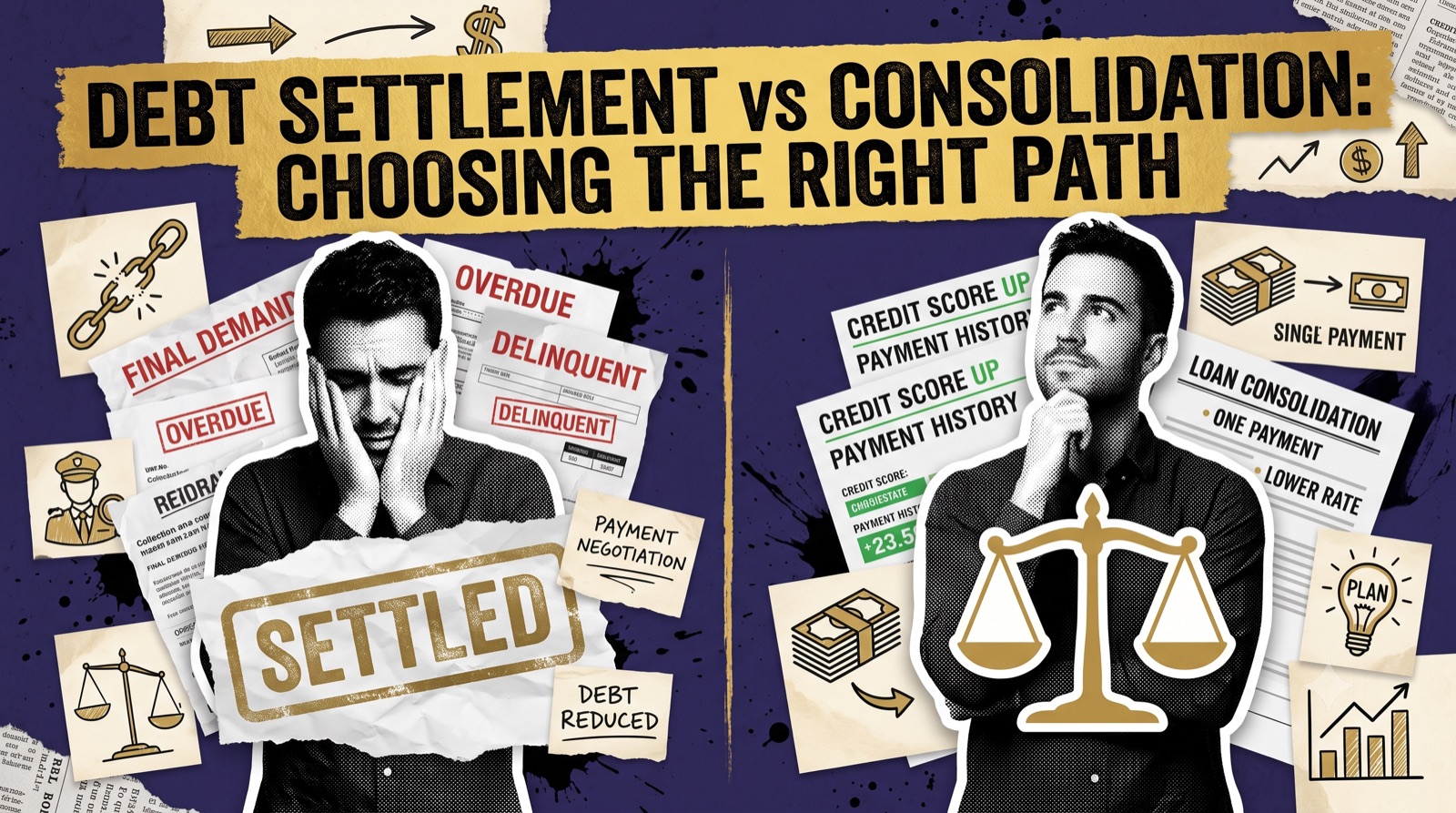
When debt starts to feel unmanageable, most people search for a fast way out and land on two terms that sound similar but work very differently: debt settlement and debt consolidation. Confusing the two — or picking one without understanding the tradeoffs — can leave you worse off than when you started. Here’s what actually separates them.
What Debt Consolidation Actually Does
Consolidation combines multiple debts into a single loan or payment, typically at a lower interest rate than what you’re currently paying across several cards or accounts. The appeal is simplicity: one payment, one due date, often a lower monthly obligation. But consolidation doesn’t reduce what you owe — it restructures it. If the underlying spending habits or income gaps that created the debt haven’t changed, consolidation can turn into a temporary relief valve rather than a real solution, and in some cases it extends the timeline over which you’re paying, which can mean more interest paid overall even at a lower rate.
What Debt Settlement Actually Does
Settlement is different: it involves negotiating with creditors to accept less than the full amount owed, usually because the debt is significantly delinquent already. It can meaningfully reduce the total balance, but it comes with real costs — settled debt is often reported to credit bureaus as “settled for less than owed,” which can affect your credit for years, and in many cases, forgiven debt is treated as taxable income by the IRS. That last part surprises people the most: settling a debt for less than you owe doesn’t just save you the difference, it can also generate a tax bill on that difference the following spring.
How to Know Which One Fits Your Situation
Consolidation tends to make more sense when your debt is manageable but disorganized — multiple payments, multiple rates, but income that can support the total if it were simplified. Settlement tends to come into play when debt has grown beyond what income can realistically service, and the alternative is continued default or collections. Neither is automatically better; both come with tradeoffs that depend heavily on your specific numbers, your credit goals, and — often overlooked — the tax consequences waiting on the other side.
The Piece Most People Forget
Whichever path you’re considering, involve someone who understands both the debt side and the tax side before you commit. A settlement that solves your monthly cash flow can quietly create a tax problem you didn’t see coming, and by the time a cancellation-of-debt form shows up, it’s too late to plan around it.
Is debt pressure keeping you up at night, and are you sure you know which option actually fits your situation? The wrong choice here isn’t just expensive — it can follow you for years on your credit report or show up as a surprise tax bill.
General education only — not individualized tax, legal, or financial advice.
← Back to Tax Resources