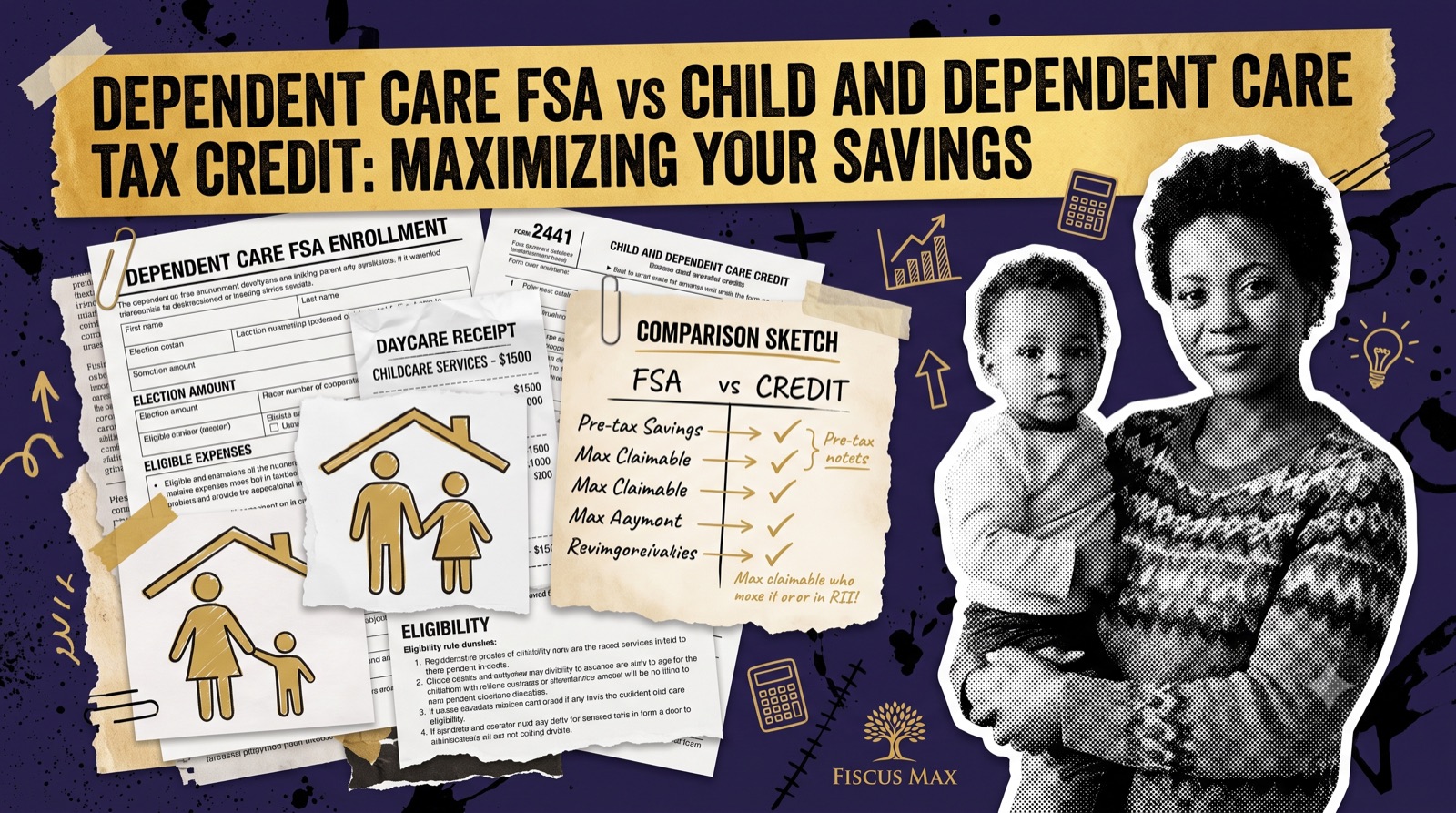
Paying for daycare, an after-school program, or summer camp so you can work is expensive enough without also getting the tax side wrong. Two of the most useful — and most confused — tax benefits for working parents are the Dependent Care FSA and the Child and Dependent Care Credit. They both exist to offset childcare costs, but you generally can’t use the full benefit of both on the same dollars, so knowing the difference matters.
How the Dependent Care FSA Works
A Dependent Care Flexible Spending Account lets you set aside pre-tax dollars through your employer to pay for eligible childcare expenses, up to an annual limit. Because the money is pre-tax, it reduces your taxable income immediately, dollar for dollar, before you ever pay tax on it. The catch is that it requires access to an employer plan, some upfront estimating of your annual childcare costs since unused funds are often forfeited, and eligible expenses need to meet specific criteria tied to enabling you and your spouse, if applicable, to work or look for work.
How the Child and Dependent Care Credit Works
The Child and Dependent Care Credit, by contrast, is claimed on your tax return regardless of whether your employer offers an FSA, and it credits a percentage of eligible childcare expenses directly against your tax bill, up to a set maximum based on the number of qualifying dependents. It doesn’t require any upfront enrollment or estimating — you simply total your qualifying expenses and claim the credit when you file. The tradeoff is that the percentage and dollar caps are often less generous, dollar for dollar, than what a well-used FSA can provide for higher earners, though it can be more valuable for those without FSA access at all.
Why You Usually Can’t Double Dip
Expenses paid through a Dependent Care FSA generally can’t also be counted toward the Child and Dependent Care Credit — the IRS doesn’t allow the same dollar of expense to generate two separate tax benefits. If your childcare costs exceed what you set aside in an FSA, though, the excess amount above the FSA limit may still qualify for the credit, which means the two benefits can work together rather than being purely either-or, depending on how much you actually spend on care each year relative to your FSA elections.
Which One Actually Saves You More
The right answer depends on your tax bracket, your total childcare spend, and whether your employer even offers an FSA option. Higher earners with access to an FSA often come out ahead maximizing that first, then applying the credit to any remaining eligible expenses. Families without FSA access, or with childcare costs below the FSA limit, may find the credit alone does most of the work. Running both scenarios with your real numbers is the only way to know for sure.
Are you leaving family tax benefits on the table without realizing it, simply because no one walked you through how these two benefits actually interact? Childcare is expensive enough — make sure the tax code is pulling its full weight to help offset it.
General education only — not individualized tax, legal, or financial advice.
← Back to Tax Resources