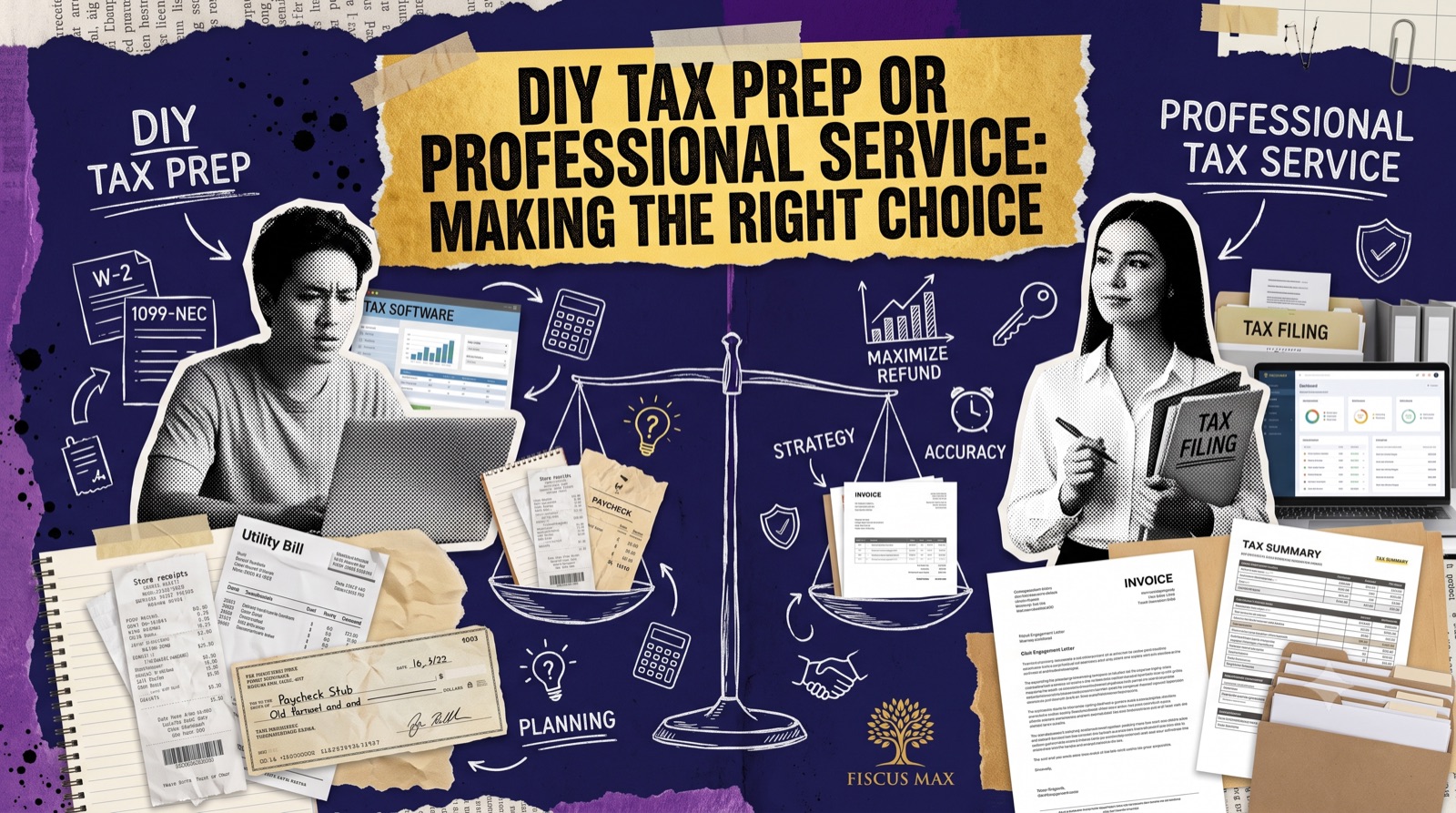
Every filing season, millions of people face the same fork in the road: open a software program and do it themselves, or hand everything to a professional. Both are legitimate choices — the mistake is picking one out of habit rather than actually weighing what your situation calls for this year. Your tax picture from five years ago isn’t necessarily the one you have now.
When DIY Software Genuinely Works
If your income comes from a single W-2, you take the standard deduction, and nothing unusual happened this year — no home sale, no business, no major life change — software can handle that return accurately and cheaply. Modern tax software is genuinely good at walking straightforward situations through the right questions, and for a simple return, paying for a preparer may not add meaningful value beyond convenience. The key word is straightforward: the moment your situation picks up a second income source, an investment sale, or a dependent situation with any nuance, the margin for a missed detail grows fast.
When a Professional Earns Their Fee
Self-employment income, rental property, significant investment activity, a business entity, or a major life event — marriage, divorce, a home sale, an inheritance — are the situations where a preparer’s judgment starts to matter more than software’s checklist logic. Software is built to apply rules; a good preparer is built to notice when your specific situation calls for a strategy, not just a rule. That difference shows up most clearly in the moments software can’t ask about because it doesn’t know to: a deduction you didn’t realize applied, a form you didn’t know you needed, an election that could have been made differently with real, lasting impact on the outcome.
The Real Cost Comparison Isn’t Just the Fee
Comparing a low-cost software subscription to a preparer’s fee misses the point if the preparer catches something software would have missed entirely. The right comparison is total after-tax outcome, not sticker price — a preparer who finds a credit you’d have overlooked, or structures something correctly the first time instead of needing an amendment later, can easily be worth several times their fee. That said, paying more doesn’t automatically mean getting more; a preparer who just re-types your numbers into the same software you’d have used yourself isn’t adding value either.
How to Decide for Real
Ask yourself honestly whether anything changed this year, whether you fully understood every line of your last return, and whether you’re confident you’re claiming everything you’re entitled to. If any answer gives you pause, that’s the signal to bring in help, at least for this year, even if you go back to doing it yourself once things settle down again.
Are you prepared, or just hoping nothing goes wrong this year? The right choice isn’t the same every year, and it isn’t the same for every person — it’s the one that matches what’s actually happening in your life right now.
General education only — not individualized tax, legal, or financial advice.
← Back to Tax Resources