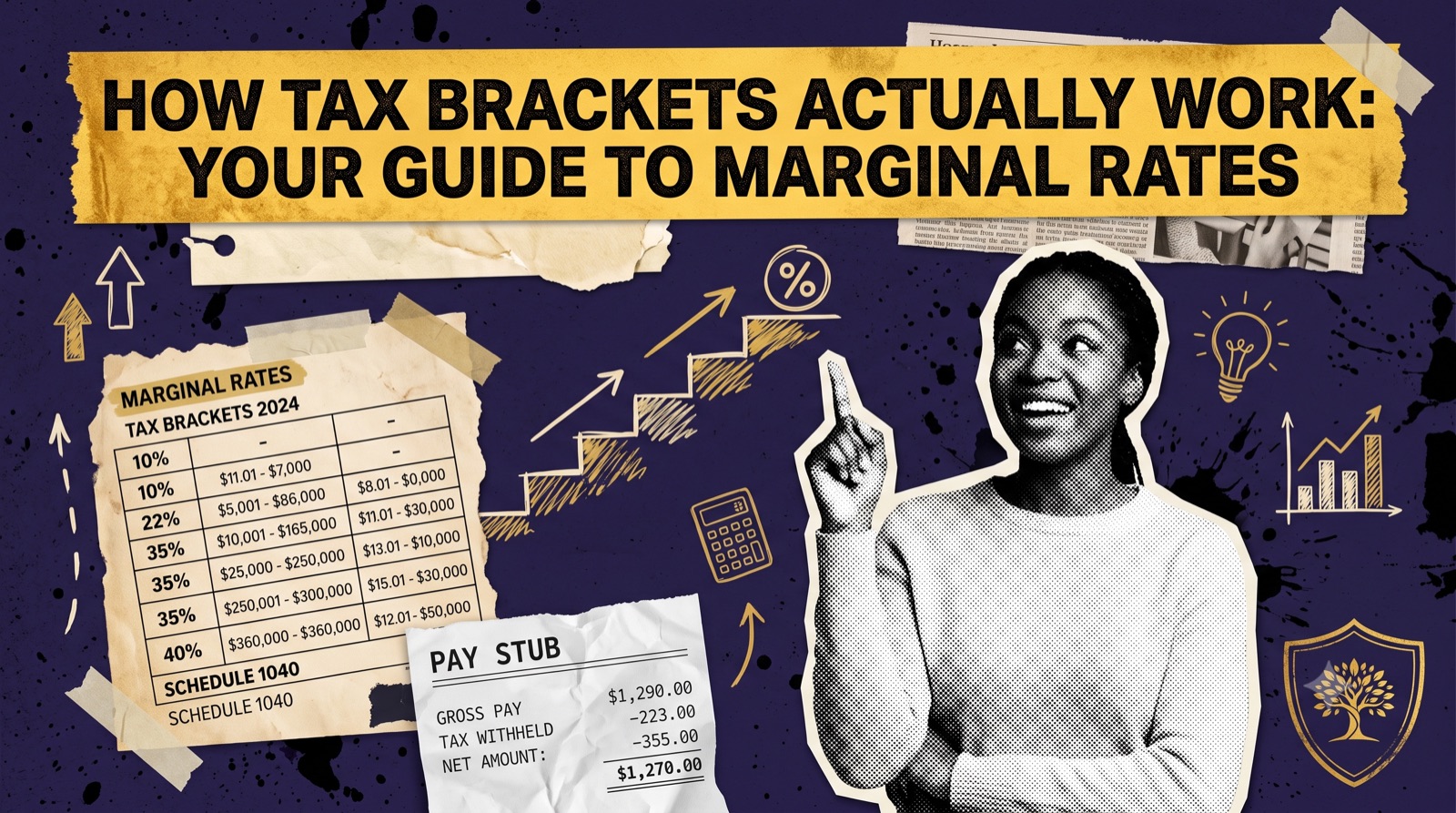
Few concepts in the tax code are as misunderstood as tax brackets. Ask most people what it means to be “in a certain bracket” and you’ll often hear that all of their income is taxed at that rate. That’s not how it works — and the misunderstanding leads people to make bad decisions, from turning down extra work to panicking over a raise that actually leaves them better off.
Marginal, Not Flat
The U.S. tax system is marginal, meaning only the income that falls within a given bracket is taxed at that bracket’s rate — the income below it is taxed at the lower rates that applied to those earlier brackets. Someone in a higher bracket isn’t paying that rate on every dollar they earn; they’re paying a lower rate on the first portion of income, a bit more on the next portion, and only the top rate on the slice that falls into that highest range. This is why a raise, a bonus, or extra freelance income almost never makes you worse off overall, even though it can feel that way when a chunk of a paycheck disappears to withholding.
What Bracket Creep Actually Means
Bracket creep happens when income rises — through raises, side income, or investment gains — and pushes a growing share of your income into a higher bracket, even without a change in tax law. It’s a natural byproduct of earning more, but it’s also predictable, which means it’s plannable. Understanding roughly where your income sits relative to the next bracket threshold lets you make informed decisions: whether it’s worth deferring a bonus, accelerating a deduction, or timing a large withdrawal into a year where it does less damage to your overall rate.
Where This Actually Matters in Planning
Bracket awareness shows up constantly in real decisions: whether to do a Roth conversion this year versus next, whether to realize a capital gain now or wait, whether an extra freelance project pushes meaningful income into a higher bracket or barely nudges it. None of these decisions can be made well without knowing where you actually sit — not just your job title’s typical income range, but your real, specific number for the year.
Don’t Let a Misunderstanding Cost You
The myth that “earning more can leave you with less” causes real harm — people turn down raises, avoid side income, or panic unnecessarily over a good year. Once you understand that only the top slice is taxed at the higher rate, most of that fear disappears, and it becomes much easier to make decisions based on what actually helps you, rather than what a misunderstood tax rule seems to threaten.
Do you know which bracket you’re actually in, and what it’s really costing you — or are you making decisions based on a misunderstanding that’s been repeated so often it feels true? Knowing your real numbers changes what you’re willing to say yes to.
General education only — not individualized tax, legal, or financial advice.
← Back to Tax Resources