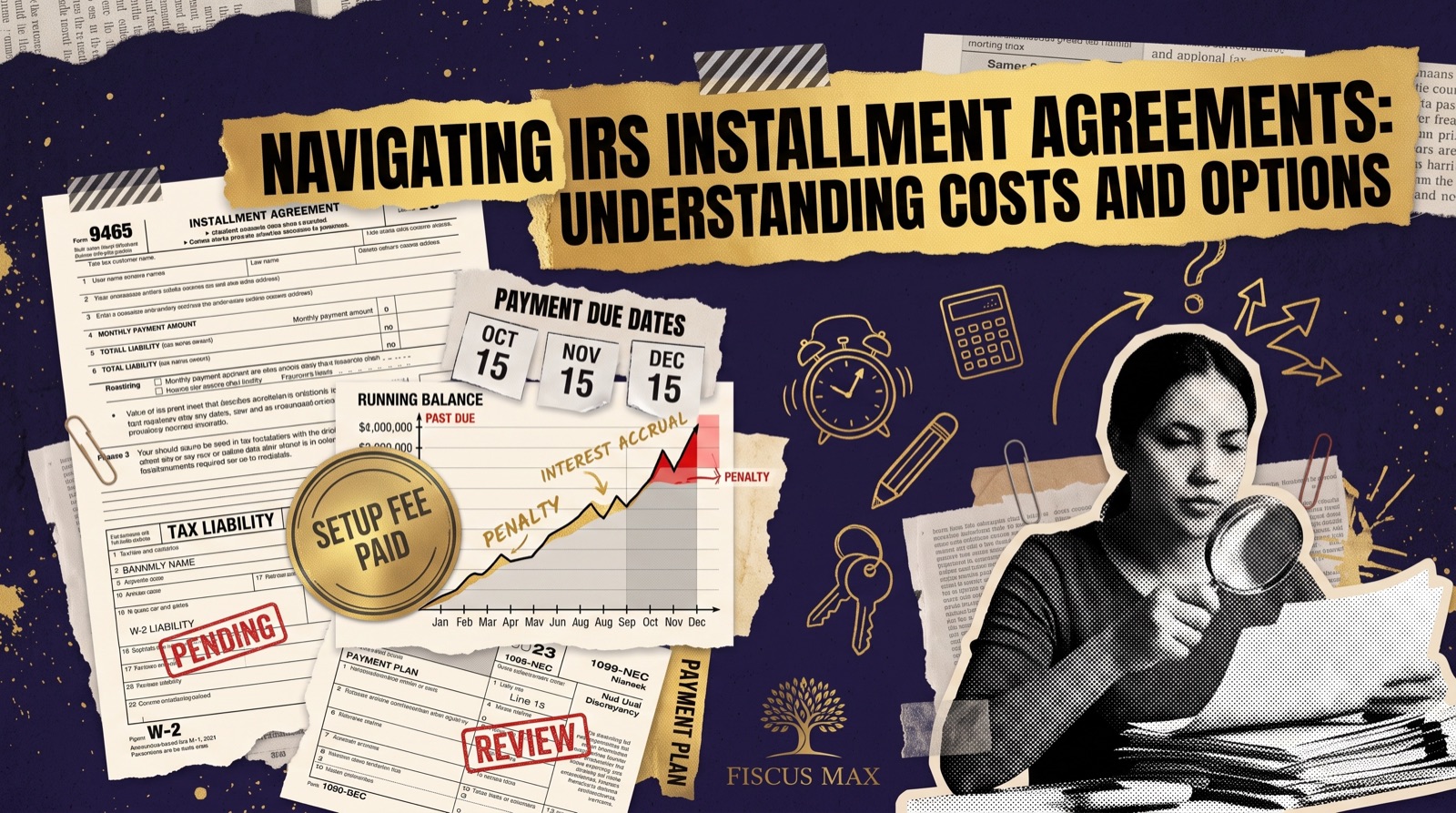
An IRS payment plan sounds like the obvious fix when you can’t pay a tax bill in full — spread it out, breathe easier, move on. What that pitch leaves out is that an installment agreement doesn’t stop interest and penalties from accruing on the unpaid balance, which means the amount you eventually pay can be meaningfully more than what showed up on the original notice.
Interest and Penalties Don’t Pause
Once you’re on a payment plan, the balance still accrues interest and a reduced failure-to-pay penalty every month until it’s paid off. The IRS doesn’t advertise this loudly, but it’s built into how installment agreements work — you’re trading immediate collection pressure for a longer timeline, not for a frozen balance. The longer the plan runs, the more that gap between what you originally owed and what you ultimately pay can grow, especially on larger balances stretched across several years.
There’s Usually a Setup Fee
Most streamlined and long-term payment plans come with a setup fee, though the amount varies based on how you apply and whether payments are set up to draft automatically from a bank account. Lower-income taxpayers may qualify to have that fee reduced or waived, but it’s not automatic — it typically requires meeting specific criteria and, in some cases, requesting it directly. Skipping this step means paying a fee you may not have needed to pay at all.
Missing a Payment Can Undo the Whole Agreement
Payment plans generally require consistent, on-time payments, and missing one can default the entire agreement, putting the full remaining balance back into active collection status — liens, levies, and all the enforcement tools that led to the plan in the first place. This is why the size of the monthly payment matters as much as the existence of the plan itself: an agreement set at a number you can’t sustain every month for years is often worse than a shorter, more aggressive plan you can actually keep up with.
When a Payment Plan Isn’t the Right Tool
For some situations, a payment plan isn’t the best option at all — an offer in compromise, a temporary hardship status, or restructuring other debt first might produce a better outcome. A payment plan is the default because it’s the easiest option to set up, not necessarily because it’s the cheapest path to being done with the debt.
Could the wrong move right now make your debt worse? A payment plan can be the right tool, but only when you understand exactly what it costs beyond the sticker number on the original notice.
General education only — not individualized tax, legal, or financial advice.
← Back to Tax Resources