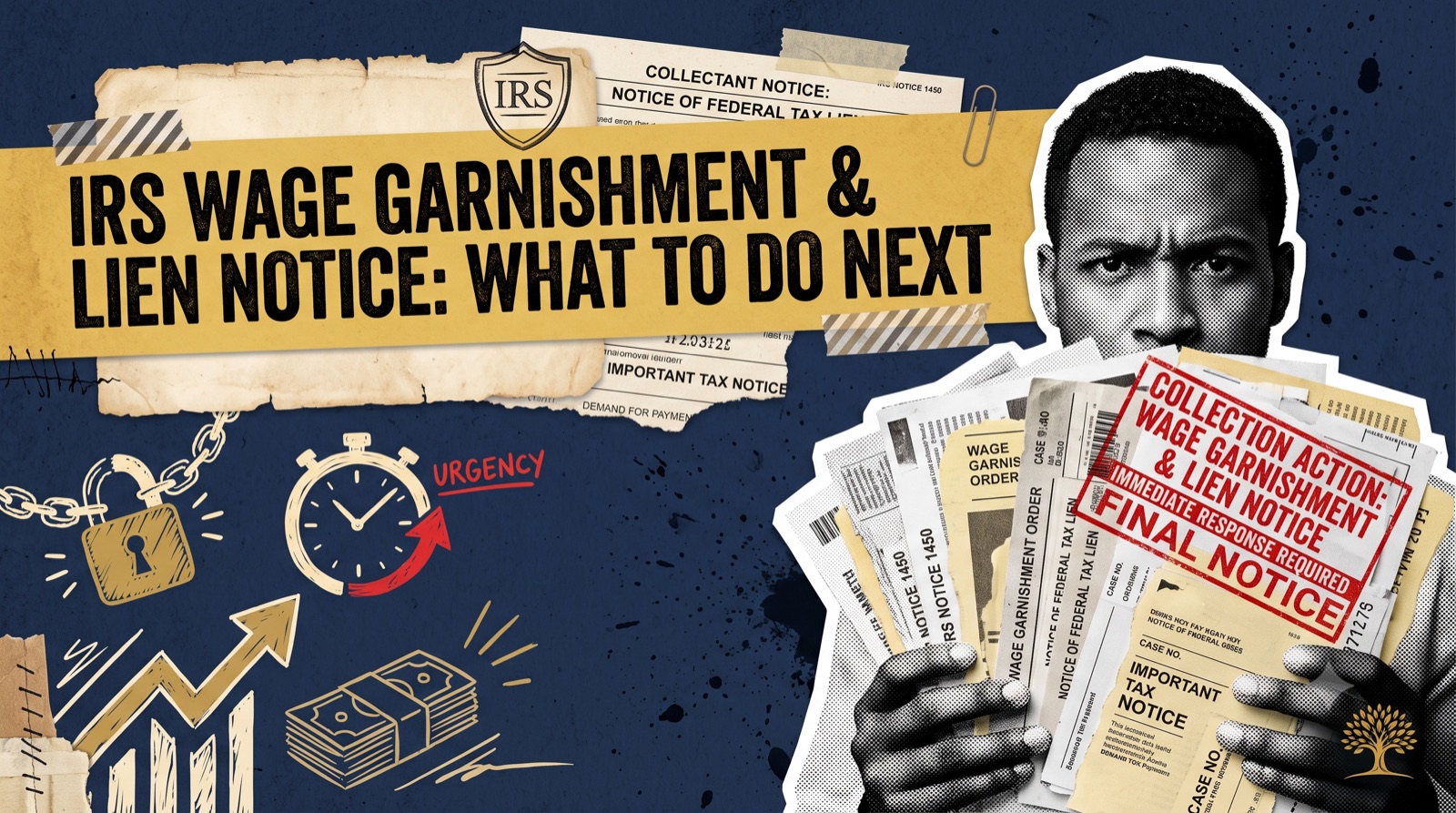
Owing money to a credit card company and owing money to the IRS can feel similar in the moment — both come with mounting stress and a growing balance. But they are not the same kind of debt, and treating IRS debt like a credit card balance you’ll get to eventually is one of the costliest mistakes someone can make. The IRS has tools, timelines, and leverage that no other creditor has.
The IRS Doesn’t Need to Sue You First
A typical creditor has to take you to court, win a judgment, and then pursue collection through the legal system before it can garnish wages or seize assets. The IRS doesn’t need any of that. It can file a lien against your property, levy a bank account, or garnish wages through its own administrative authority, without a courtroom involved at any point. That’s a fundamentally different level of collection power than any private lender holds, and it’s exactly why tax debt tends to escalate faster and with less warning than most people expect.
Penalties and Interest Compound Differently
Unpaid tax balances accrue both interest and separate failure-to-pay and failure-to-file penalties, and those penalties can add up faster than the interest most people associate with expensive credit card debt. Filing late compounds the problem further — the failure-to-file penalty is generally steeper than the failure-to-pay penalty, which means even if you can’t pay what you owe, filing on time still matters enormously. A balance that starts modest can grow substantially within a year or two if it’s simply left alone.
The IRS Actually Offers More Flexibility Than People Assume
Here’s the part that surprises people: despite its collection power, the IRS also offers more structured relief options than most private creditors ever will — installment agreements, penalty abatement in certain circumstances, and in limited cases an offer in compromise that settles a debt for less than the full amount owed. None of these are automatic, and none of them work well if you wait until a levy notice arrives to start exploring them. Reaching out proactively, before enforcement action starts, puts considerably more options on the table than waiting for the IRS to act first.
Why Ignoring It Is the Worst Option
Silence doesn’t slow down IRS collection — it accelerates it, since without a response, the agency simply proceeds through its standard enforcement timeline. Every notice has a response window, and every missed window narrows what’s still negotiable. The single best thing anyone with IRS debt can do is respond early, even if the honest answer at that point is that they can’t pay it yet.
Do you know your real options before the next notice arrives? IRS debt rewards early action and punishes silence more than almost any other kind of debt.
General education only — not individualized tax, legal, or financial advice.
← Back to Tax Resources