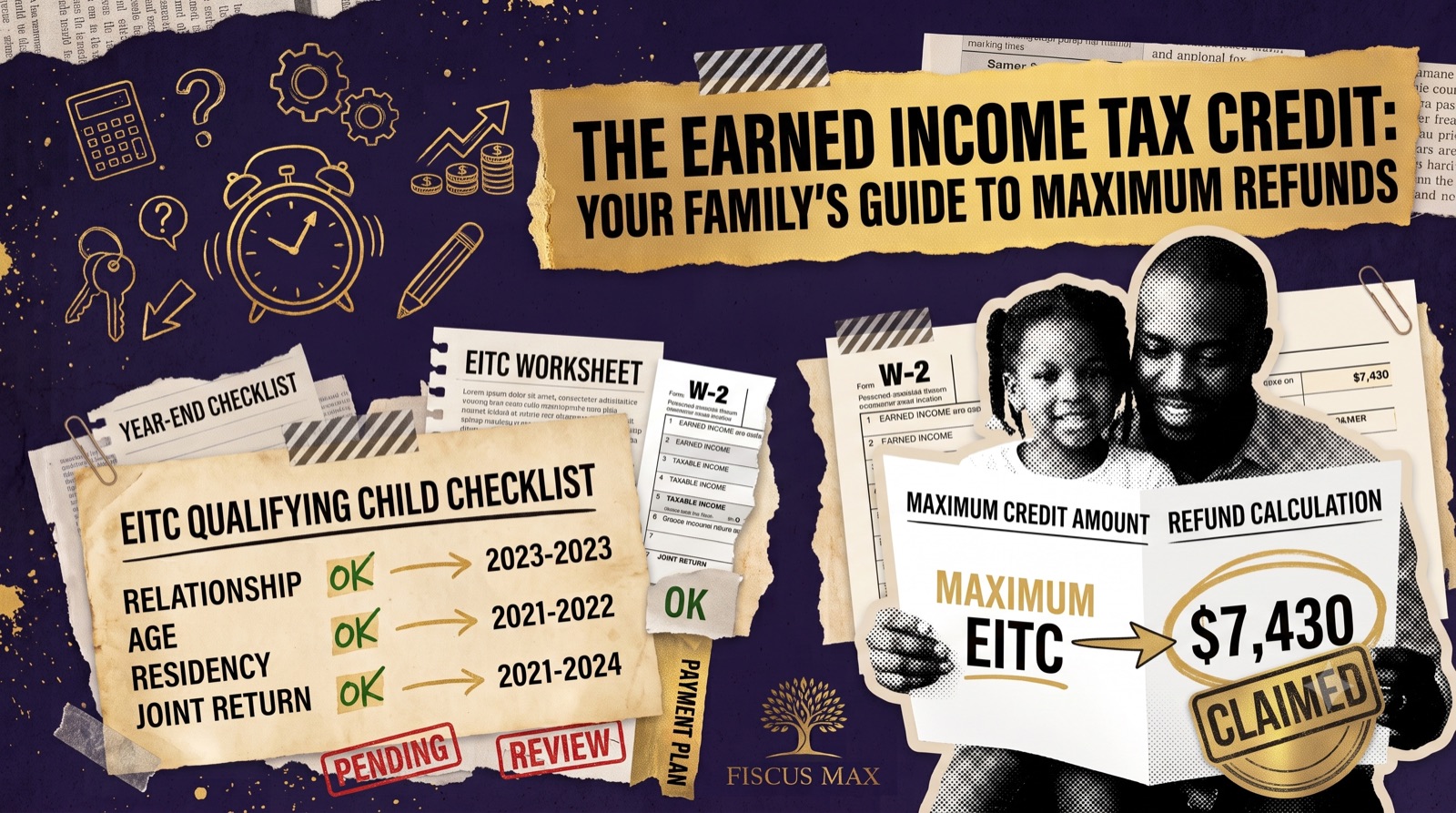
The Earned Income Tax Credit is one of the largest tax benefits available to working families, and also one of the most frequently miscalculated or missed entirely. It’s designed to reward work, phasing in as earned income rises and phasing back out at higher income levels, which means small changes in income, filing status, or number of qualifying children can shift the credit meaningfully in either direction.
It’s Built Around Earned Income, Specifically
The credit only counts earned income — wages, self-employment income, and similar — not investment income, retirement distributions, or unemployment benefits. That distinction trips up families who assume total household income is what matters, when in fact the calculation is based specifically on what was earned through work. Self-employed individuals need to calculate net earnings correctly, since business expenses reduce the earned income figure that determines the credit, which can cut both ways depending on how a return is structured.
The Number of Qualifying Children Changes Everything
The credit amount and the income range where it phases out both shift significantly based on how many qualifying children are claimed, with a smaller, separate version available for workers without children. Getting the qualifying-child determination right matters enormously here — the same custody and residency tests that apply to the Child Tax Credit apply here too, and a child who qualifies for one credit generally qualifies for this one as well, assuming the income limits are met.
Investment Income Can Disqualify You Entirely
There’s a limit on investment income above which a taxpayer becomes ineligible for the credit regardless of how low their earned income is. Families with even modest interest, dividends, or capital gains sometimes lose access to a credit worth far more than that investment income itself, simply because they didn’t realize the limit existed. This is a case where a small amount of unrelated income can eliminate access to a much larger benefit.
Why This Credit Gets Left Unclaimed So Often
A significant share of eligible families don’t claim this credit every year, often because they assume their income is too high, too low, or too unusual to qualify, or because a life change — a new job, a new baby, a shift in custody — changed their eligibility in a way they never revisited.
How much could your family be saving with the right strategy in place? This credit exists specifically to reward work — claiming the full amount you’re owed is simply collecting on that promise.
General education only — not individualized tax, legal, or financial advice.
← Back to Tax Resources