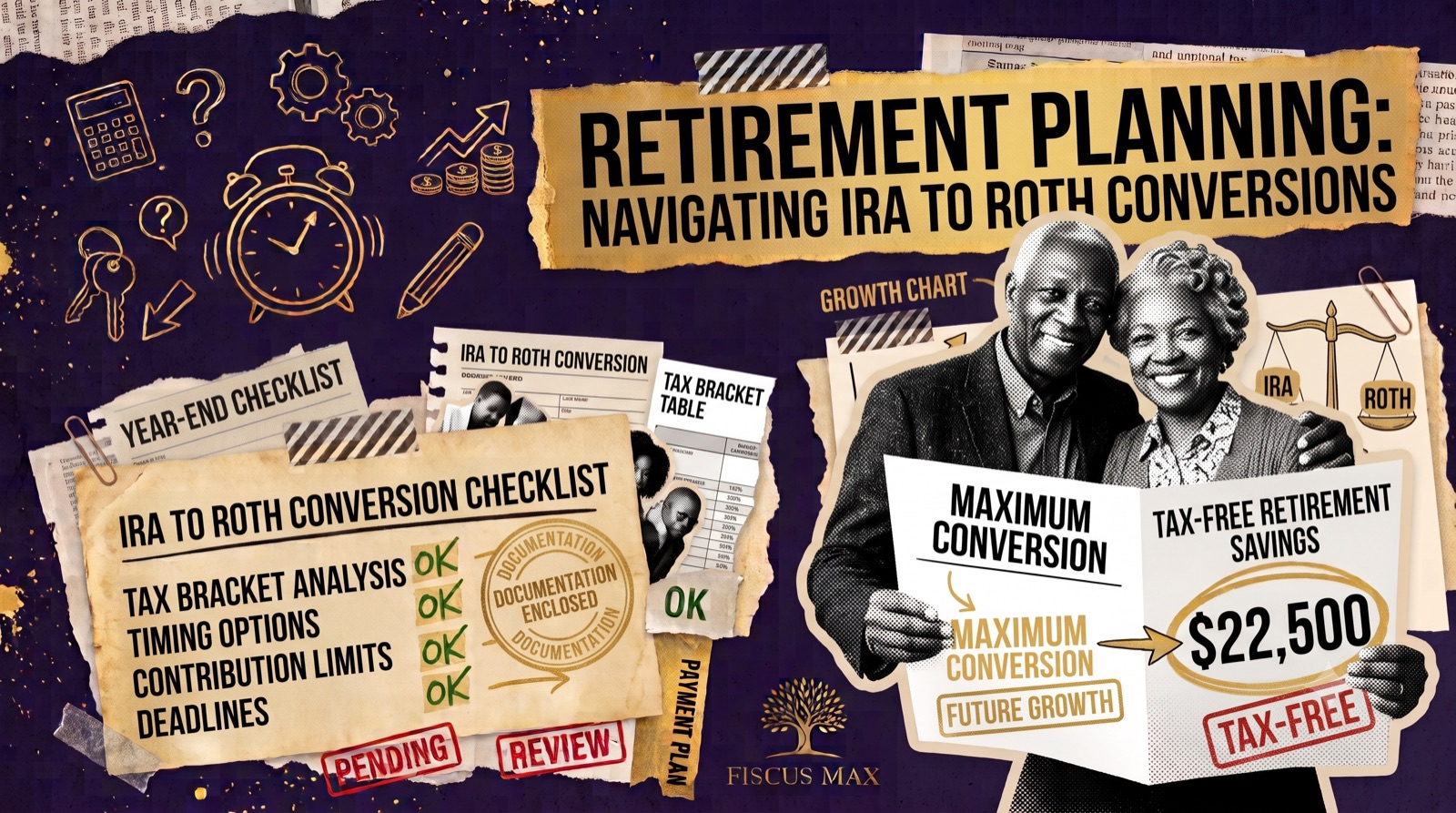
A Roth conversion moves money from a traditional retirement account, where withdrawals are taxed later, into a Roth account, where qualified withdrawals are tax-free — but the conversion itself is taxed as income in the year it happens. That tradeoff makes conversions powerful in the right year and expensive in the wrong one, which is exactly why timing, not the concept itself, is where most of the decision-making actually lives.
Low-Income Years Are the Classic Opportunity
A year with unusually low income — between jobs, early retirement before other income sources begin, a slow year for a business — creates room to convert at a lower tax rate than you’d pay in a typical year. Converting enough to fill up a lower bracket, without pushing into a higher one, lets you move money into tax-free growth at a discount compared to converting the same amount during a high-income year. This is why conversions are so often discussed in the context of the years just before other retirement income, like Social Security or required distributions, begins.
Weigh the Tax Bill Against the Long-Term Benefit
Because the converted amount is taxed as ordinary income in the year of conversion, it’s important to have funds outside the retirement account to cover that tax bill — using retirement funds themselves to pay it reduces the amount that actually gets the benefit of tax-free growth going forward. The math generally favors conversion when you expect to be in a similar or higher bracket in retirement than you are now, or when you want to reduce future required distributions that could otherwise push you into a higher bracket later.
Consider What Happens to Heirs, Too
Roth accounts can also be a meaningful estate planning tool, since heirs generally inherit them without owing income tax on qualified withdrawals, unlike a traditional account where every dollar withdrawn is taxable to whoever inherits it. For anyone planning to leave retirement assets to children or other beneficiaries, this shifts the calculation beyond just your own tax rate today versus in retirement, into a broader question of who ultimately pays tax on this money and when.
This Isn’t an All-or-Nothing Decision
Conversions don’t need to happen in one lump sum — partial conversions spread across several years can manage the tax impact more precisely than converting an entire account balance at once. Treating it as a multi-year strategy, revisited annually based on that year’s actual income, tends to produce a better outcome than a single, one-time decision made without that flexibility.
Are you reacting to your taxes, or planning for them? A Roth conversion is one of the clearest examples of a move that rewards planning and punishes guessing.
General education only — not individualized tax, legal, or financial advice.
← Back to Tax Resources