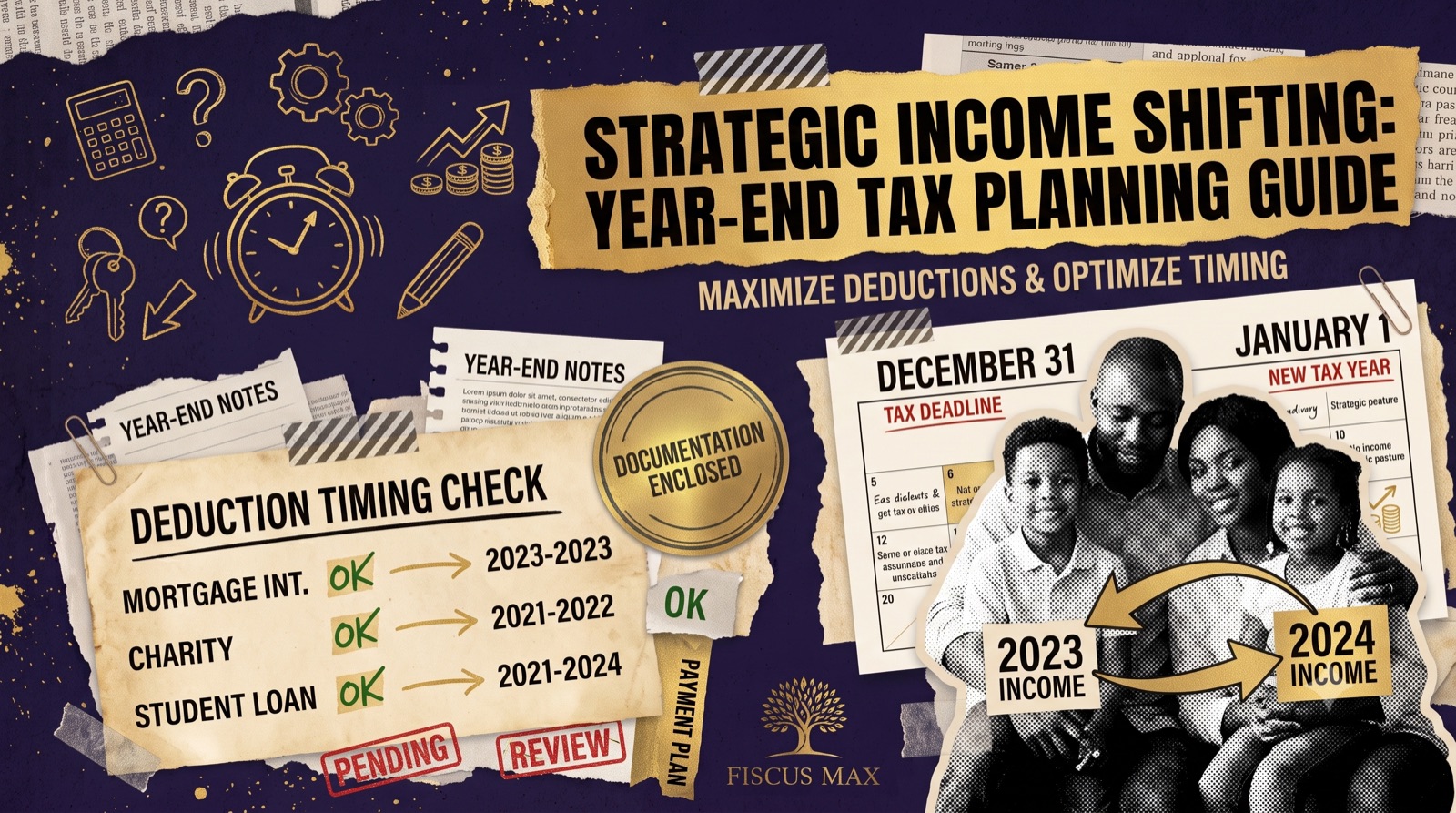
Two people can earn the exact same amount of money in a year and end up with very different tax bills, simply based on when that income showed up and when their deductible expenses were paid. Timing isn’t a loophole — it’s one of the most basic and most underused tools in tax planning, and it works because the tax code cares about which calendar year a dollar lands in, not just how much you eventually earn.
Shifting Income Between Years
If you have some control over when income arrives — a year-end bonus, a freelance invoice, a large client payment — moving it into a lower-income year rather than a higher-income one can reduce the overall rate applied to it. This works especially well around a year where income is unusually high or unusually low compared to your normal pattern: pushing income out of a spike year, or pulling a deduction into it, does more work than the same move in an ordinary year where your bracket isn’t shifting much either way.
Accelerating or Deferring Deductions
The same logic runs in reverse for deductible expenses. Prepaying a deductible expense in December instead of January moves the benefit into this year’s return instead of next year’s, which matters if this year’s income puts you in a higher bracket than you expect to be in next year. Property tax payments, certain business expenses, and charitable contributions are common candidates for this kind of shift, since many can legitimately be paid slightly earlier or later depending on which year benefits more from the deduction.
Why This Matters More in Uneven-Income Years
Timing strategies matter most for people whose income isn’t steady year to year — business owners, freelancers, anyone with a bonus-heavy compensation structure, or someone who just sold an asset. A steady W-2 earner in the same bracket every year has less to gain from shifting things around, because there’s no meaningful difference between the rate applied this year versus next. The bigger the swing in your income from one year to the next, the more valuable it becomes to actively manage which year absorbs which dollar.
This Requires Looking Ahead, Not Just Back
The catch with timing strategies is that they require a rough projection of next year’s income before this year ends — you can’t optimize a shift you haven’t planned for. That’s the real argument for treating tax planning as an ongoing conversation rather than a once-a-year filing exercise: the moves that matter most all happen before the year closes, not after.
Could a five-minute change today lower what you owe next spring? The dollars are often the same either way — it’s the calendar year they land in that decides how much of them you keep.
General education only — not individualized tax, legal, or financial advice.
← Back to Tax Resources